

Tax records can offer invaluable genealogical clues and are particularly important for eras or locations where census records are not available. In Maryland, we are fortunate that portions of colonial tax lists for several counties are available. The majority of these have been transcribed by Karen Walker, who has generously donated her transcriptions to the Maryland Genealogical Society.
Transcripts for the following nine counties are available: Anne Arundel, Cecil, Charles, Dorchester, Frederick, Kent, Prince George's, St. Mary's, and Talbot. A description of the records and information about the transcriptions is below.
Colonial tax lists also exist for Baltimore, Montgomery, and Somerset counties (see more information below). A history of taxation in Maryland is available from the Maryland State Archives (MSA), principal repository of the state's historic tax records.
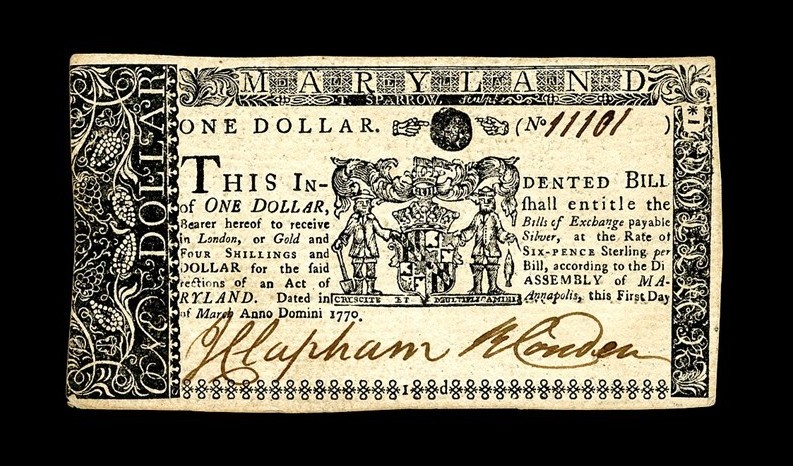
What is the source of these tax records? These tax lists were transcribed from records at MSA of the Secretary in Maryland (MSA S244 / MSA SM186) on microfilm reel SR4543. The Secretary carried out various important functions for the colonial Governor and Council, including collection of revenue. These tax lists have been digitized but may only be viewed at MSA.
Are other tax lists available that aren't included in these abstracts? Yes. The counties prepared the lists and sent copies to the Secretary. Tax lists (and one transcription) for counties that did not survive in the records of the Secretary are available at MSA in the records of those counties. They are:
- Baltimore County: 1699-1706, 1737, 1773 (MSA C428 / MSA CM918) The lists are digitized but available to view only at MSA.
- Montgomery County: 1777 (MSA C2082) The list has not been digitized.
- Somerset County: 1723-1759 (MSA C1812) The tax lists have not been digitized, but MSA has posted online transcriptions of the tax lists prepared by J. Elliott Russo, Ph.D. His introduction to the transcriptions offers interesting details about the taxation system and the specifics of the Somerset tax lists.
Who was taxed? All white males 16 years and older, including servants, and all enslaved males and females 16 years and older.
Who was not taxed? White women, clergy, the very elderly, and the disabled were not taxed. If a woman was listed, she probably was a widow or other relative who inherited property, but she was not taxed.
Are all the lists in the same format? No. Each list was prepared by a representative of the county or its component hundreds, usually the sheriff or constable. Some lists only included the name of the head of household with the number of taxables. Some lists included every taxable member of the household. Some lists only counted the number of slaves; some lists named each slave. One list included the names of child slaves.
Are the lists complete records of the population at the time? No. Many of the lists are fragments. Pages have been lost, torn, and damaged through time.
What do the brackets mean? On each tax list, people were grouped into families or households. The constable drew boxes around each group or bracketed them together. The number after the bracket indicates the number of taxable persons in each group. Remember that if a white woman was listed in a group, she was not counted in the number.
Why are some of the letters in italics? Often, the pages were damaged and parts of names would be missing. If there was enough of the name to make a reasonable guess, the missing letters were indicated in italics. As examples, John or William.
Could there be errors in the transcriptions? In the words of transcriber Karen Walker, "Yes. The records were transcribed and checked by one human who apologizes for any errors and wishes you good fortune in finding your ancestors on the lists."